By Denys Medvediev
Troubleshooting
Dictation language won't change? Windows and Mac fixes
Dictation that won't change language is almost always a settings mismatch, not a bug — and the fix is two menus deep on each operating system.
Last updated: June 2026

Dictation that won't change language is almost always a settings mismatch, not a bug. On Windows, voice typing has no language picker of its own — it follows your keyboard input language, so you change that first. On Mac, you change it under System Settings, Keyboard, Dictation, and add a language with the Edit button next to Languages.
I once spent twenty minutes convinced my dictation was broken. It was working perfectly. It was just listening for the wrong language, because I'd switched my keyboard to test something and forgot. The fix took four seconds once I knew where to look. The looking took twenty minutes.
That gap — between "it's broken" and "it's a setting two menus deep" — is this entire article. Most of the time, nothing is broken. Something is just pointed at the wrong language. Here's the part nobody tells you up front: built-in dictation doesn't treat "what language am I speaking" as one clear knob. Windows hides it inside the keyboard. Mac buries it in Keyboard settings and, on newer versions, drags your keyboard layout along for the ride. Below are the exact menus, for both operating systems, plus the speech-pack step most guides skip.
Why dictation stays stuck on one language

There are three reasons dictation gets stuck, and only one of them is rare.
The first: you're changing the wrong setting. On Windows especially, there is no "dictation language" control — the system follows your keyboard. The second: the language you want isn't installed yet, so the menu hides it or greys it out. The third, the rare one: the speech pack failed to download and sits half-broken.
The boring truth is most "won't change" reports are reason one. People hunt for a dictation language dropdown that doesn't exist, find nothing, and conclude the feature is broken. It isn't. It's wired to a different switch. Let's find that switch on each operating system.
Windows: your voice typing follows the keyboard language
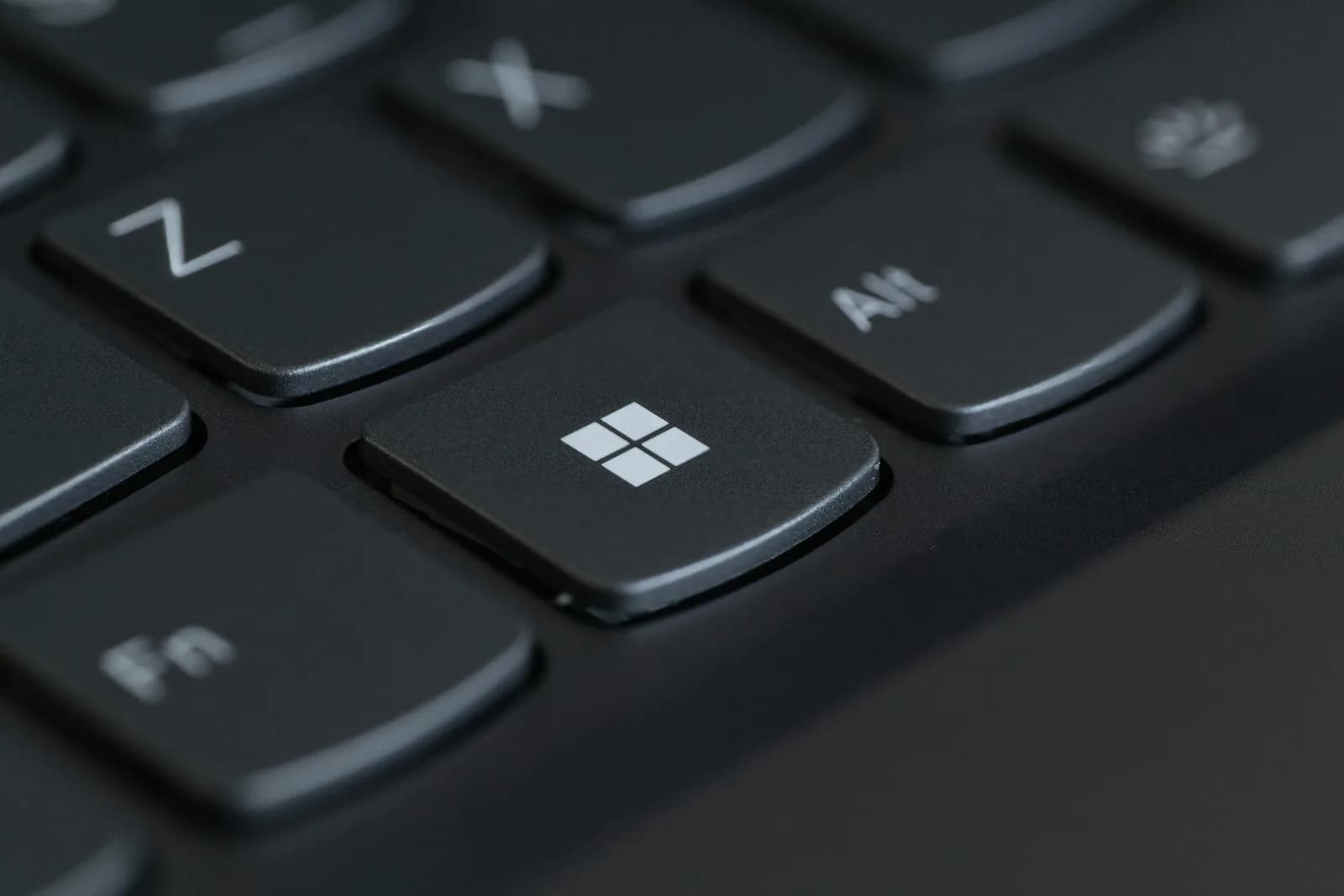
This is the single fact that fixes most Windows cases. Voice typing on Windows has no separate dictation-language picker. Microsoft says it plainly: "To switch voice typing languages, you'll need to change the input language you use." So if you dictate in Polish but Windows types English, your keyboard input language is still English. The microphone listens for whatever the keyboard says.
That's why you couldn't find the setting. There isn't one. The "dictation language" is just your current input language wearing a different hat. Once you know that, the fix is short. Do these in order.
- Switch your keyboard input language. Click the language switcher in the corner of your taskbar, or press the Windows key plus Spacebar, and pick the language you want.
- Press the Windows key plus H to start voice typing. It now listens in that language.
- Speak. The text should appear in the right language.
If the language you want isn't in the switcher, you haven't added it yet. Go to Settings, then Time and language, then Language and region, then Add a language. Install it, and it shows up in the Win+Spacebar switcher. If Win+H itself isn't responding, that's a different problem — we wrote a separate piece on why Win+H is greyed out. New to the feature? The full walkthrough for voice typing on Windows covers the basics.
Download the speech language pack — the step most guides skip
You added the language, it's in the switcher, and dictation still won't work in it — or the speech option sits there greyed out. This is the step almost everyone misses: adding a language is not the same as installing its speech features. I've been almost everyone, more than once, on my own machine.
Open Settings, then Time and language, then Speech, and add the voice for your language. Or go the long way: Settings, Time and language, Language and region, click the three dots next to your language, then Language options. Under Language features you'll find Text-to-speech, Basic speech recognition, and Enhanced speech recognition.
Windows supports voice typing in dozens of languages, but only the ones Microsoft offers speech features for. Here's the catch worth knowing. Microsoft notes that "not all languages have speech features. If some or all of the above features aren't available as an option, that language doesn't have those speech features." So a greyed-out speech option is sometimes not a bug — it's Windows telling you it can't do speech in that language at all. That's the wall some readers hit, and the last section is for it.
If you've switched the input language, added the language, and installed the speech pack, and it's still stuck, two more levers exist. Run the Speech troubleshooter under Settings, System, Troubleshoot, Other troubleshooters. As a genuine last resort, reset your language settings under Settings, Time and language, Language and region, then reboot. A Microsoft community responder recommends this sequence for stubborn cases — it's community advice, not an official Microsoft fix, so treat it as the thing you try when nothing else worked. While you're there, check Windows Update; a stale build sometimes won't pull a speech pack cleanly.
Mac: change the dictation language in System Settings, Keyboard, Dictation

Mac keeps its dictation language in a more honest place than Windows, but it's still a scroll away. Open System Settings, then Keyboard, then Dictation. Apple's instruction: "Go to Dictation, click the Edit button next to Languages, then select a language and region." Deselect a language to remove it.
If you select a language and it just won't take, there's a community workaround that fixes most cases: toggle Dictation off, wait about ten seconds, toggle it back on, then reselect your language and microphone. That forces the language pack to re-download. It's not Apple's documented step, but it clears the stuck state often enough to be worth ten seconds. And Apple says "Dictation is not available in all languages or regions," so the same "this language can't do speech" wall from Windows exists here too.
Mac: switch languages mid-sentence with the abbreviation next to the cursor
Once you've added more than one dictation language, Mac lets you switch on the fly without diving back into Settings. While dictating, "click the language next to the cursor" or "press the Globe key (if available), then choose the language you want to use." That indicator only appears once you have two or more languages added — so if you don't see it, add a second one with the Edit button first.
For the wider tour, our guide to dictation on Mac covers setup end to end.
Mac gotcha: changing the dictation language also switches your keyboard
This one isn't in Apple's documentation, and it catches people off guard. Mac users report that on macOS Sonoma and later, changing your dictation language also switches your keyboard layout to match — because Sonoma lets you type while the mic is live, so it lines the keyboard up with the spoken language. You switch dictation to French for one email, and suddenly your keyboard produces French punctuation when you type.
There's no built-in toggle to separate the two. The workaround is to switch your keyboard layout back by hand afterward — manual, annoying, and Apple hasn't published a clean fix. This is the one "won't change" pain where the built-in tools genuinely don't have a good answer, which is a fair place to mention there's another way.
When to skip the built-in fix and let the app pick the language
If the fixes above worked, you're done — you don't need anything else, and I'd rather you used the dictation already built into your operating system. Use it. That's the honest answer for most people.
But two situations make the built-in route a grind. One: you keep switching languages and you're tired of fighting the Windows keyboard link or the Mac layout swap. Two: your language sits behind that greyed-out speech wall and the OS simply won't do it. That's where Whisper by Remskill takes a different approach. In its Settings there's a row labeled Language, where you pick the language you expect to speak — or leave it on Auto Detect and let the multilingual model identify it for you. That choice is a software setting. It never touches your keyboard layout.
The reach is wider too. Whisper's multilingual models handle 90-plus languages, auto-detect included — picked by name, not by which keyboard is active. (The English-only models hide the Language picker, since they only do English.) Early on, a user emailed asking if it could follow Ukrainian-to-English mid-sentence while he read Kyiv news, switching languages every few words. I'd assumed "multilingual" meant pick-one-per-session. He meant true switching. Auto-detect already did it — I just hadn't pointed people at it. He never wrote back, which I've decided to read as a good sign.
The whole multilingual local pipeline is free with no card at signup; it triggers with Ctrl+Space on Windows or Command+Option on Mac. If you write across languages daily, our notes on speech-to-text for non-native English speakers go deeper.
Most productivity tools are typing problems wearing a costume. Dictation that "won't change language" is the same trick — a four-second fix dressed up as a broken feature, hiding two menus deep. Now you know which menu. My twenty-minute version of this is a sunk cost; yours doesn't have to be. Point it at the right language and get back to whatever you were actually trying to say.
Want a language picker that ignores your keyboard?
Download Whisper, pick your language (or leave it on Auto Detect), hold the hotkey, and watch the transcript land at your cursor — no keyboard swap, no greyed-out speech wall.