By Denys Medvediev
Comparison
The best Dragon alternatives
Dragon was the name in dictation for two decades. In 2026 its workflows are stranded — Windows-only, no Mac client, still asking for a voice profile. Here's what to switch to instead.
Last updated: June 2026
A Dragon NaturallySpeaking alternative is dictation software that does what Dragon did without the Windows-only desktop license. Strong picks in 2026 include Whisper by Remskill for offline writing on Windows and Mac, Apple Dictation for short Mac notes, and Windows Voice Typing for quick cloud dictation. None require the old per-user voice training.
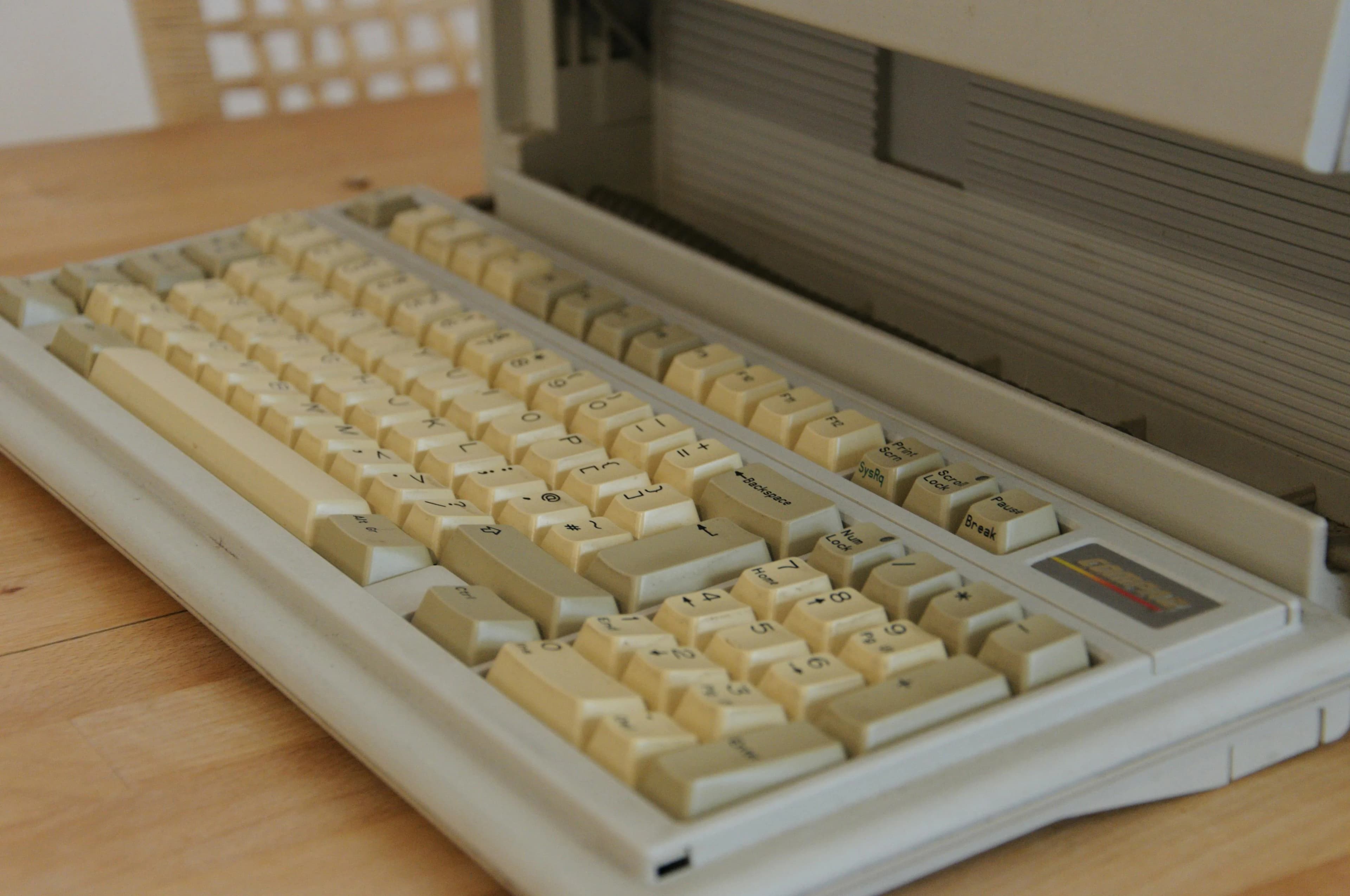
Twenty-five years ago a relative had Dragon NaturallySpeaking on a Windows 98 desktop with 64MB of RAM. Setup meant reading a word list aloud for 45 minutes to "calibrate" the software. Then it worked, at maybe 70% accuracy with a four-second delay per sentence. Dictating one paragraph of a holiday letter took fifteen minutes. The headset eventually went across the room. It survived. The dictation experiment did not. I filed Dragon away under "good idea, wrong decade," and didn't think about it again until people started asking me what to use instead.
That's the question now. Dragon was the name in dictation for two decades, and the people who used it daily — lawyers, doctors, writers with wrist pain — built real workflows around it. In 2026 those workflows are stranded: the current Windows product is Dragon Professional v16, there is no Mac desktop client at any tier, and Nuance itself is now a Microsoft property. This article compares the dictation tools worth switching to, scored on platform, offline support, languages, and whether they make you train a voice profile. By the end you'll know which one fits your machine and your work. After a year of reading these tickets, I can tell you most of the email on this topic comes from ex-Dragon users who assumed every modern tool still needs that 45-minute setup. It doesn't.
The boring truth is most people don't need what Dragon was selling. They need text to appear when they talk, in whatever app they're already in, without a server in the loop or a license tied to one operating system. That's a lower bar than Dragon set, and most modern tools clear it.
How I scored these tools
I didn't rank these on a star system, because dictation isn't a star-system kind of decision. The right tool for a Windows-only lawyer who works hands-free is the wrong tool for a writer on a MacBook who just hates the trackpad. My first instinct was to build a weighted scoring spreadsheet with eleven columns. I am the kind of architect who diagrams a system before installing the runtime. Then I deleted it, because nobody picks dictation software off a spreadsheet. So I scored each option on four things an ex-Dragon user can feel.
First, platform: which operating systems it runs on, because the single biggest reason people leave Dragon is that they moved to a Mac and the desktop product followed them nowhere. Second, offline support: whether the audio leaves your machine, which decides everything for legal, medical, and confidential work. Third, language coverage, qualified by the catch most comparison tables get wrong: a tool's headline language count tends to apply to one specific mode, not all of them. Fourth, training: whether you have to enroll a voice profile before the thing is useful, which is the friction that sent most of these readers looking in the first place.
I tested the modern tools the way a normal person would: install, press the key, talk, see what lands at the cursor (the most rigorous test bench I could find was my own desk on a Tuesday). The figures below come from each maker's own documentation and, for Whisper, from the shipping app's own model catalog. No invented benchmarks, no star ratings, no "9.4 out of 10."
Why people are leaving Dragon in 2026

Dragon didn't get worse. It mostly stopped. There has been no new desktop release in the 2024–2026 window, and the live product is still Dragon Professional v16, tuned for Windows 11 and backwards-compatible to Windows 10.
The bigger problem is the platform wall. Dragon's current desktop lineup ships no macOS client at any tier, and the Dragon Professional page makes no mention of Mac at all. If you bought a MacBook in the last few years, Dragon on the desktop is not an option. Nuance still sells cloud and mobile editions as subscriptions, like Dragon Professional Anywhere and the Dragon Anywhere mobile app, so "Dragon is gone" is too strong. "There is no current Dragon desktop app for Mac" is exactly right.
Then there's training. Dragon is built around a per-user voice profile, and that setup step is the friction ex-users mention most. It made sense in 1998, when compute was scarce and the model needed your voice to have a chance. In 2026 it's a tax you pay before you've dictated a single useful sentence.
Cost plays in too, though I'll keep the numbers off this page and on the pricing page where they stay current. The relevant point isn't the exact figure; it's the shape. Dragon's desktop tier is a one-time license, the Anywhere editions are subscriptions, and the whole product line has had no new desktop release to justify a fresh purchase in years. Meanwhile, the tools people are switching to are either free and built into the operating system or free for everything that runs locally. When the incumbent stops shipping and the alternatives start at nothing, people notice.
None of this means Dragon is bad software. It means the world moved. Macs got popular, speech models got good enough to skip the calibration step, and "your audio stays on your machine" went from a nice-to-have to a compliance requirement in a lot of jobs. Dragon was built for the previous version of all three.
What Dragon does well, and where it now falls short
Dragon earned its reputation, and it's worth being fair about why. For two decades it was the only serious option if you needed to write at length by voice, and it built features the lighter tools still don't match. The voice-command system, which selects text, formats paragraphs, and navigates menus and dialog boxes by voice alone, was ahead of its time. For someone who cannot use a keyboard at all, that command grammar is not a nice extra; it's the whole product, and nothing in the free built-in tools replaces it. Dragon also let you correct mistakes by voice and build domain-specific vocabularies for medical and legal work, which is why those professions adopted it first. Here's what that classic dictation bar looked like in use:
Where it falls short is everything around the dictation. The per-user voice profile is a setup cost you carry forever. The desktop product is Windows-only. And the whole thing predates the shift that made modern speech-to-text good: large models that work on most accents and languages out of the box, with no calibration. Which brings me to the one opinion I'll spend in this article.
If your dictation tool needs you to "train" it, it's 1999. Modern speech models handle most accents and dozens of languages the first time you press the key. The local Whisper multilingual models alone cover 99 languages with auto-detection, no enrollment, no word list. The training UI made sense when my relative was reading words to a Windows 98 box. It does not make sense now. A tool that still asks for it is asking you to subsidize a 25-year-old constraint.
The alternatives worth knowing
The short list, scored on the things that matter when you leave Dragon: which platforms it runs on, whether it works offline, how many languages it covers, and whether it makes you train a profile.
Whisper by Remskill. Two local engines that run on your machine, pure Rust, no Python in the loop: OpenAI's open-source Whisper and NVIDIA's Parakeet. Local Whisper ships eight model sizes and the multilingual ones cover 99 languages with auto-detect; the English-only builds are English only. Parakeet is a single ~600 MB model that runs 5–10× faster than Whisper on CPU, covering 25 languages (English plus 24 European), with no translate-to-English. There's also a cloud mode that uses your own OpenAI key. Runs on Windows and Mac (Apple Silicon). No voice-profile training.
Apple Dictation. Built into every Mac, free, turned on in System Settings under Keyboard, then Dictation. General text dictation can be processed on-device on supported languages. It covers 60+ language and regional variants on current macOS, and you can dictate text of any length — it stops after about 30 seconds of silence, not at a hard length cap. Mac only. No training.
Windows Voice Typing. Built into Windows 11, free, opened with the Windows key plus H. It needs an internet connection because it runs on Azure Speech services, and it covers 40+ languages. Windows only, and cloud-only, so it does nothing on a plane. No training.
Google Docs Voice Typing. Free, browser-based, lives inside Google Docs under Tools, then Voice typing. It's good for drafting a document, but it only works inside a Google doc in a supported browser, which Google lists as Chrome, Edge, and Safari (Firefox is not supported). That makes it useless the moment you want to dictate into an email client, a chat app, or anything that isn't a Google doc. A narrow tool that does its one thing well.
Wispr Flow and the cloud-dictation startups. A wave of cloud-first dictation apps launched in the last couple of years, most of them the same architecture: a speech model running on someone else's server, a tidy interface, and a monthly bill. They work, and the polish is real. The catch is that, by design, these tools typically send your audio off your machine to be transcribed, and the subscription is the business model. If that trade is fine for you, fine; if it isn't, I compared the Wispr Flow trade-offs in detail.
Otter.ai and the meeting tools. Worth naming because ex-Dragon users sometimes land here by accident. They transcribe meetings with multiple speakers, not your live cursor. Different category. If you want one, I wrote up the Otter.ai trade-offs separately.
For most people leaving Dragon, the real question is local versus cloud and Windows versus Mac. If you want the wider field of tools beyond the Dragon-replacement angle, the transcription software roundup goes broader; if offline is the thing you care about, the offline speech-to-text options are worth a read on their own.
Whisper vs Dragon Professional, side by side
Most ex-Dragon users want one comparison: a one-time-license Windows desktop tool against a free, cross-platform, offline one. The overlay shows how much simpler the modern flow runs: press the hotkey, speak, release, and the text lands at your cursor, which is the whole interaction.
| Feature | Whisper by Remskill | Dragon Professional v16 |
|---|---|---|
| Platforms | Windows + macOS (Apple Silicon) | Windows desktop only; no Mac client |
| Works offline | Yes — two local engines on-device | Yes (desktop), per-machine install |
| Languages | 99 on Whisper multilingual; 25 on Parakeet | Not published on the current product page |
| Voice-profile training | None | Per-user voice profile |
| Activation | Ctrl+Space (Win), Command+Option (Mac) push-to-talk | Voice commands plus on-screen toolbar |
| Cloud option | Optional, bring-your-own OpenAI key | Separate Dragon Anywhere subscription |
The hotkey is the part people underestimate. On Windows you hold Ctrl+Space, talk, and let go. On Mac you hold Command+Option together and release either key to stop. The transcript pastes wherever your cursor is, in any app you can type in: email, a document, a chat box, a code comment. If you want the text cleaned up or rephrased, you say "Hey whisper" and the AI layer handles it. No mode-switching, no toolbar, no profile.
There's also a control story that Dragon users will recognize. The thing Dragon's voice profile was trying to buy — getting your names, your jargon, your domain terms right — local Whisper gets at without enrolling you. You can feed it custom vocabulary and hotwords, adjust beam size for how hard the model searches for the best transcription, and switch on voice activity detection to filter silence and background noise. That's the dial-it-in control Dragon power users miss in lighter tools, available without the calibration ritual. The local Whisper multilingual models also do something Dragon's profile never managed: translate-to-English from 99 languages, with auto-detection, no language picker. If you write across languages, that alone is the switch.
The other quiet difference is portability. Dragon ties a profile and a license to one Windows machine. Whisper runs the same way on Windows and Mac, and because the heavy lifting happens on-device, there's no account-tier difference in how dictation behaves; it's the same press-speak-paste on a four-year-old laptop as on a new one. For the privacy-minded, the fact that two real engines run fully offline is the part that matters most.
Where Dragon still leads: deep voice-command control of the operating system. If your workflow is hands-free top to bottom — navigating menus, correcting text, formatting, all by voice — Dragon's command grammar is more developed than anything in the simpler tools. That's a real reason to stay, and I'll come back to it.
When to stick with Dragon, and when not to
Here's the honest cut. If you depend on full hands-free operation — whether that's an accessibility need, an injury, or a job where touching the keyboard isn't on the table — Dragon's mature voice-command system is still worth its license, and you're on Windows already, so the platform wall doesn't bind you. Stay. If you've spent years building Dragon custom commands and macros that drive your specific software, that investment doesn't port to a simpler tool; switching means rebuilding muscle memory, and for some people that cost outweighs everything else here. Be honest with yourself about which camp you're in.
For everyone else, the calmer answer wins. For short Mac notes, skip every paid tool: Apple Dictation is free, on-device, and handles dictation of any length, stopping after about 30 seconds of silence. For a quick cloud dictation on a Windows machine that stays online, Windows key + H is already installed and free. Reach for Whisper when you write a lot, work offline, switch between Windows and Mac, or just don't want to train a profile to send one email. The decision isn't "what's the best dictation software." It's "what's the best dictation software for the machine I own and the work I do." Frame it that way and the shortlist gets short fast.
If you are a Mac user deciding specifically between the free built-in option and the legacy paid one, our Apple Dictation vs Dragon comparison settles it on accuracy, cost, and which workflows each one still fits.
Pricing without the runaround
Whisper is free for everything that runs on your own machine: both local engines, the AI cleanup through Ollama, history, presets, hotwords, model downloads, your custom hotkey, with no card asked at signup. The paid tier, Whisper Pro, adds the cloud layer that uses OpenAI. Apple Dictation and Windows Voice Typing are free and built into their operating systems. Dragon's desktop license is a one-time purchase and its Anywhere editions are subscriptions. The exact figures live on the pricing page. I'd rather link to the real numbers than quote ones that drift.
My relative's headset survived the Windows 98 era. The dictation didn't, and for twenty-five years "voice typing" stayed a punchline at family dinners. Last year my younger daughter dictated a full email to her grandmother in 90 seconds, no calibration, no word list, no headset thrown anywhere. Dragon walked so the rest could run. You just don't have to read it a word list first.
Leaving Dragon? Try the calmer option.
Download Whisper, press the hotkey, and watch your words land at the cursor — no profile, no training, no Windows-only license.
Free for everything that runs on your machine. No card at signup.