By Denys Medvediev
Comparison
A Trint alternative? Depends what you're transcribing
Trint turns recorded audio and video files into editable text in a browser. Whisper by Remskill does not transcribe files at all — it's live dictation: press a hotkey, speak, and the text lands at your cursor in any app. Two different jobs the same search keeps smashing together.
Last updated: June 2026

A Trint alternative depends on what you transcribe. Trint turns recorded audio and video files into editable text in a browser; Whisper by Remskill does not transcribe files at all. Whisper is live dictation — press a hotkey, speak, and the text lands at your cursor in any app. For recorded files, stay on Trint, or use Sonix, Descript, Rev, or Happy Scribe. Whisper is for the smaller group who never wanted file transcription at all: they have a keyboard they're tired of, and want to talk and have the words appear live, wherever the cursor is.
So before you read another word: if you searched "Trint alternative" because you have a stack of recorded interviews, lectures, or video to turn into text, Whisper is the wrong tool. We don't open your files. We have no upload button, no transcript editor, no project library. The honest move is to send you to Trint, or to Sonix, Descript, Rev, or Happy Scribe. I'd rather you find the right tool than bounce off the wrong one.
There's a smaller group I can actually help. About one in ten people who type "Trint alternative" don't have a file to transcribe — they have a keyboard they're tired of. They want to talk and have the words appear, live, wherever the cursor is. That's the slice Whisper owns, and most file-transcription roundups never mention it. This article draws the line clearly so you land on the right side of it.
The boring truth is that "transcription" hides two completely different jobs. One is turning a recording you already have into editable text. The other is replacing typing while you work. Trint is built for the first. Whisper is built for the second. Most of the confusion in this whole category comes from one word doing two jobs.
What Trint actually is: file transcription, an editor, and a per-seat bill

Trint is a cloud platform for turning recorded audio and video into editable, searchable text. You upload a file (or capture one live), Trint returns a transcript, and you fix it against playback in your browser. From there you can translate it, caption it, summarize it with an AI Assistant, edit video by editing the transcript with Rough Cuts, and collaborate on the same document with your whole team in real time.
That feature list tells you who Trint is for. It positions itself for newsrooms, sports media, production companies, podcasters, law firms, education, and financial services — teams that collaborate on transcripts at scale. Trint says it transcribes in more than 40 languages and translates into 70-plus. None of that is dictation. It's a content-production workflow, and a good one.
The pricing matches the audience. Trint is a per-seat subscription with no permanent free plan — a 7-day trial only. Third-party 2026 estimates put the entry tier around $80 per seat per month, with a hard cap of roughly seven files per user per month, and an unlimited single-user tier higher up; Enterprise is custom. I'd treat those numbers as a range, not gospel — Trint's own plan page sits behind a login, so check the current Trint plans before you commit. The shape is the point: this is enterprise software priced per head.
When Trint is the right tool — and you should stay
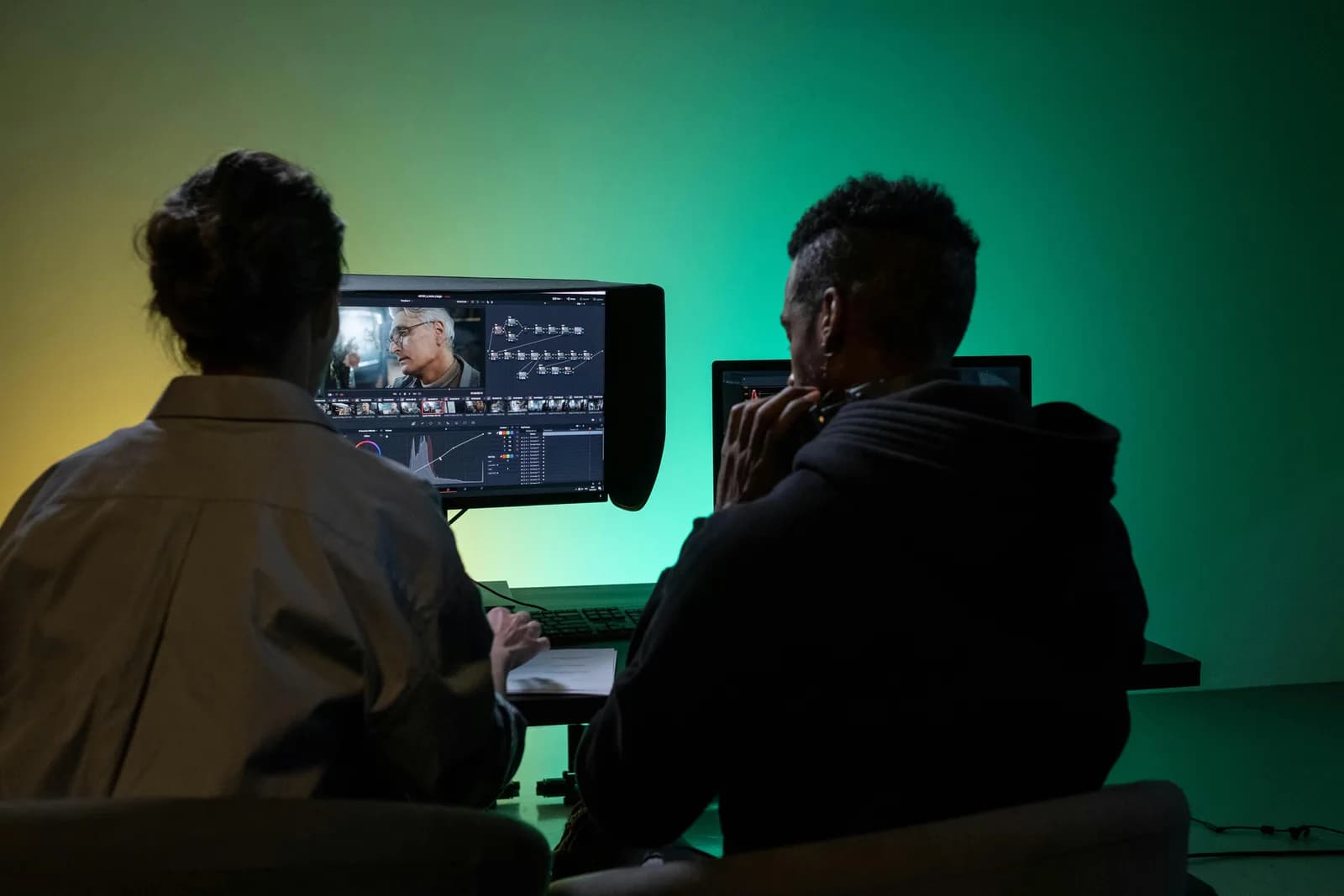
This is the part most "alternative" articles skip, so let me be blunt. If your work looks like any of the following, Trint (or another file tool) wins and Whisper is not in the conversation.
You upload recorded audio or video and need it transcribed — Whisper genuinely cannot do this. You edit transcripts against playback and export SRT, VTT, or DOCX. You need translation into dozens of languages or auto-captioning for video. Your newsroom or production team collaborates on the same transcript in real time. You want Rough Cuts to cut video by editing text, and an AI Assistant to pull quotes and summaries. You need SSO, SCIM, and audit logs for governance — that's Trint's Enterprise tier.
If two or more of those describe your week, close this tab and go enjoy your trial. None of them are things Whisper pretends to do. A newsroom running on shared transcripts is not going to be served by a single-user hotkey, and I'm not going to insult you by claiming otherwise.
If you need file transcription, here's who I'd actually use

Say Trint is too expensive or too heavy but you still have files. These are the real alternatives — every one a file or meeting transcription tool, not a dictation tool. I'm keeping the takes to one line each on purpose; I haven't lived in all of these, so I won't quote numbers I can't stand behind.
- Sonix — cloud upload transcription with a clean in-browser editor, translation, and subtitles. The closest like-for-like swap for Trint's core job. See the longer Sonix comparison.
- Descript — an audio and video editor that transcribes, then lets you edit the media by editing the text. Built for podcasters and video. More in the Descript write-up.
- Rev — AI transcripts plus human-verified transcripts and captions when you need accuracy signed off by a person. Details in the Rev comparison.
- Happy Scribe — automated and human transcription with strong subtitle and caption output.
- Otter — live-meeting and async transcription with summaries, aimed at meetings rather than media production.
Any of these does Trint's job in some form. If you're choosing between recorded-file tools, that's your shortlist. We're not on it, and that's correct.
The one slice Whisper owns: live dictation at your cursor
Here's where Whisper earns its keep. You press a system-wide hotkey, you talk, and the transcription appears at the cursor in whatever app has focus — email, Slack, a CRM field, a Google Doc, a code editor. There's no upload, no project, no editor to open. The default hotkey is Ctrl+Space on Windows and Command+Option on macOS, held as push-to-talk, and you can rebind it.
You pick how the speech gets turned into text. Local Whisper models run on your machine and cover 90-plus languages on the multilingual variants; the English-optimized ones are English only. NVIDIA Parakeet is the fast local option — English plus 24 European languages, and noticeably quicker on a plain CPU. And Whisper Pro adds an opt-in Cloud mode that uses your own OpenAI key for transcription, AI enhancement, and web search. Three paths, your call.
One honest caveat on language, because the wording matters. Whisper's multilingual models can translate your spoken input into English live. That is not the same job as Trint translating a finished transcript into 70-plus target languages. Different direction, different use. If you need a French subtitle file from an English interview, that's Trint's lane, not ours.
Local and offline — the thing Trint can't do

This is the cleanest line between the two tools. Trint does not work offline. Its desktop and mobile apps require an internet connection at all times; the mobile app buffers a recording and syncs when it reconnects, but there's no true on-device transcription. Whisper's local mode runs the speech model on your own machine, with no network call and no telemetry about what you dictate. The audio never leaves the laptop.
That's not a feature checkbox to me — it's the whole reason this category exists. A dictation tool that can only run in the cloud, with no offline mode at all, is a privacy disaster waiting to be transcribed. Your boss's salary spreadsheet, the email to your kid's school, the brief you're drafting — none of that should be forced through a vendor's servers just because you wanted to type with your voice. Opt-in cloud is fine when you choose it with eyes open. Cloud as the only option, for every word, is the part I'd avoid.
I learned the cost side of this the hard way watching someone else's bill. A team I worked with had a contractor build an internal cloud dictation prototype that called an API for every utterance. It re-transcribed standup recordings four times over because the "smart retry" logic was too aggressive, and the quarter closed with a five-figure cloud bill on the dashboard. The CFO's take was short: or we could not pay to transcribe meetings that already have notes. Local-first sidesteps the whole conversation. The microphone and the CPU are already on your desk.
The free local pipeline — the models, on-device AI cleanup, history, custom words, the hotkey — is free for anyone with an account, no card at signup. That's a different thing from the Pro Cloud trial, which is the only place a card comes up. Don't let me conflate the two for you.
Pricing: per seat versus one machine
Trint charges per seat, every month, with no permanent free tier — and the entry plan caps you at roughly seven files a month. For a newsroom of twelve, that math works, because the value scales with the team. For one person who just wants to stop typing, it's a strange shape to buy into.
Whisper inverts it. The local dictation tier is free per account with no payment method at signup, and Whisper Pro — which adds the optional Cloud surface — is a flat individual price, not a per-seat one. I won't quote the numbers here; they live on the pricing page where they stay current. The principle is the difference: Trint prices a team workflow per head, and we price a tool you install once.
Realized your problem was the keyboard, not the recordings?
If you read this far hoping I'd talk you into Whisper for your interview backlog, I'm sorry to disappoint — I'd be selling you a screwdriver for a screw that doesn't exist on it. If recorded files are your real job, Trint is sitting right there and does it well. But if somewhere in the last thousand words you realized your real problem was the keyboard, not the recordings, then download Whisper and dictate your next email instead of typing it. Same words. One fewer step.
Free local dictation forever. No payment method at signup. The 7-day Cloud trial asks for a card only at upgrade.