By Denys Medvediev
Comparison
Google Recorder alternative: record or dictate?
A Google Recorder alternative depends on the job. One tool records audio you keep and search. The other types by voice into your work. Pick the job first.
Last updated: June 2026
A Google Recorder alternative depends on the job. Google Recorder records audio and transcribes it as you speak, keeping a searchable archive you can replay. Whisper by Remskill does the opposite job: it types by voice into any app on a Windows or Mac computer and keeps no audio file. Decide which one you need first.
That fork matters more than any feature list. Most people searching for a Google Recorder alternative are on a Pixel or Android phone, want to record a lecture or a meeting, and want the audio kept and searchable. If that's you, the honest answer is that Whisper is the wrong tool, and this article will tell you what to use instead.
A small slice of searchers want something different: they're at a computer and they want to talk and have it typed for them. That slice is the only one Whisper fits. So before anything else, answer one question — are you trying to record audio, or type by voice?
Google Recorder records audio. Whisper types for you.
Here's the boring truth: "Google Recorder alternative" is two searches wearing one keyword.
One search is "I want what Google Recorder does, somewhere it isn't." You want to capture a meeting, a class, an interview, and walk away with both the audio and a transcript you can search. That's a recorder.
The other search is "I wish Google Recorder could just dictate into my laptop." You don't want a saved recording at all. You want to talk and watch the words land in your email, your doc, your code. That's dictation.
Two different jobs. Google Recorder is built for the first. Whisper is built for the second, and only on a desktop. Most of this keyword's traffic is the first job, which is why most of this article is about pointing you to the right recorder before I ever mention ours.
What Google Recorder actually does (and does well)
Google Recorder is Google's free, first-party recorder, and it's good. You hit record on meetings, lectures, band practice, voice memos, and it transcribes the speech in real time as you go.
The part people actually love is what happens after. You can search by word across every recording, and it auto-tags sounds — music, applause, speech — so you can jump straight to a moment. It generates AI summaries of what was said. You can edit the transcript and translate it in supported languages. On a Pixel it transcribes on-device, offline and private, with no upload. Supported Pixel devices add speaker labels so you can tell who said what. Back it up and you can revisit recordings online at recorder.google.com.
That's a real product doing a real job. None of it is something I'm going to try to talk you out of.
When Google Recorder is the right tool — keep using it
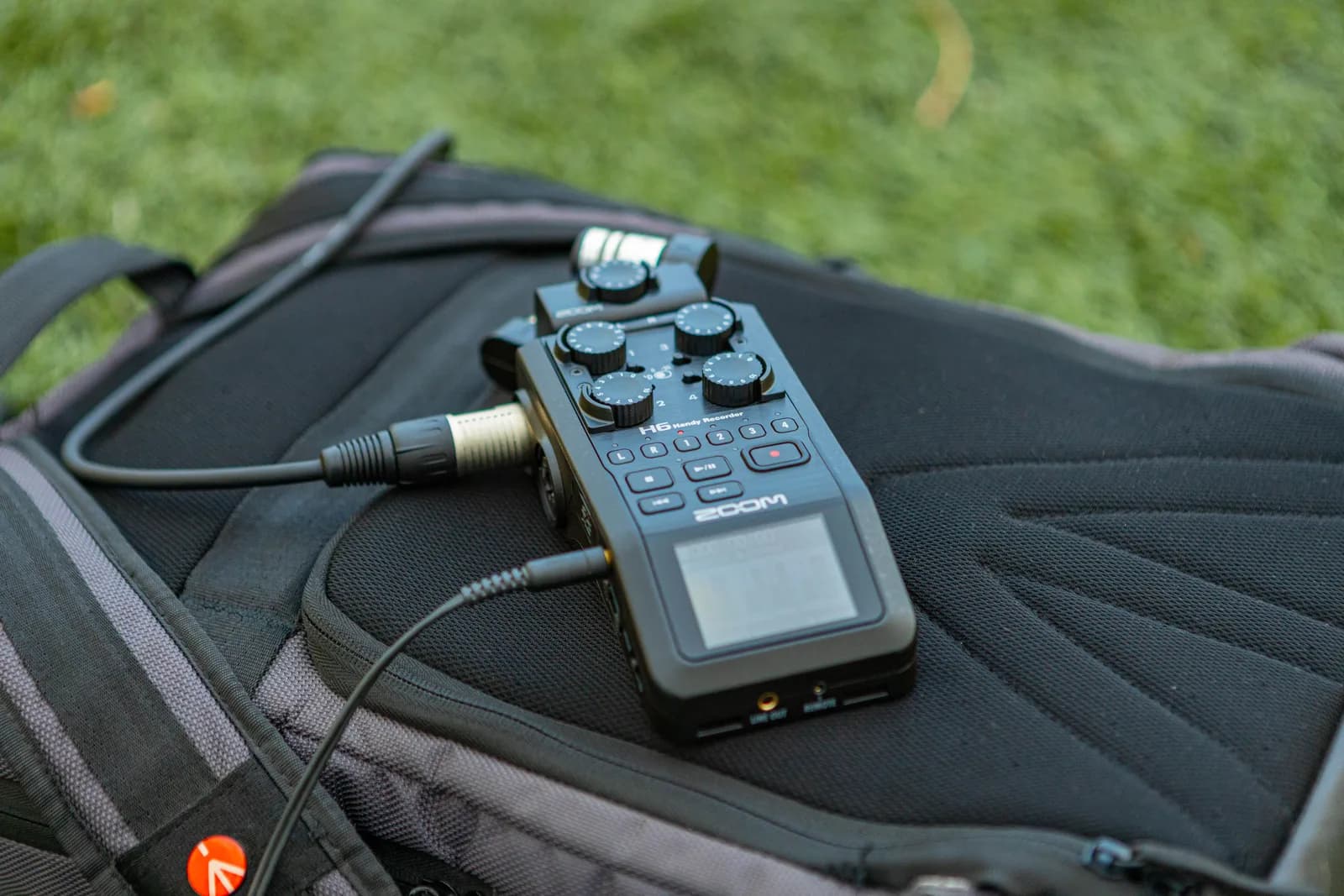
Let me say this plainly, because it's the most useful thing in the article: if you want to record and keep audio, Google Recorder is the right call, and Whisper will not replace it.
Use Google Recorder when you want to capture a lecture, a meeting, or an interview and keep the recording. Use it when you want a searchable audio archive — search by word, jump to a tagged sound. Use it when you want an AI summary of an hour of talking. Use it when you want on-device, offline, private transcription on a Pixel. And use it because it's free, with no subscription.
Whisper does none of those things. It keeps no audio file, builds no archive, labels no speakers, writes no summaries. If recording is the job, stop reading here and keep the app you have. The internet's "Top 12 alternatives" lists exist because Pixel-only stings, not because Google Recorder is bad at recording.
If you're on a Pixel or iPhone, this isn't your tool
The real complaint behind most of these searches isn't the recording. It's the fence around it.
Google Recorder is officially Pixel-exclusive, except the original Pixel 1. You can sideload it onto some non-Pixel Android phones via APK, but that's unofficial and unsupported. There is no official iPhone app, no Windows app, no Mac app. And recorder.google.com is a web viewer for recordings you already backed up — it does not record on a desktop.
So if you're reading this on a phone hoping for "Google Recorder, but on my device," I have to be straight with you: Whisper is desktop-only, Windows and Mac. It does not run on Android, Pixel, iPhone, or iPad. It is not a way to get Google Recorder onto your phone, and it doesn't port Google Recorder to your laptop either — it's a different job. For a phone recorder, the roundup further down points at tools that actually run there.
Recording audio vs dictating into your work
Here's where the small slice of you who wanted dictation all along gets the actual answer.
Recording captures sound for later. You press record, life happens, you get a file plus a transcript, and the value is in going back to it. Dictation skips the file entirely. You talk, the words appear in whatever you were already writing, and there's nothing to revisit because the output is the document itself.
If you ever found yourself recording a voice memo of an email just so you could type it up later, that's the tell. You didn't want the recording. You wanted the typing done. I did this for years before I built the thing that does it for me, which tells you roughly how fast I learn. That's the job Whisper exists for — and it's why a lot of people end up here by accident, looking for a recorder when what they needed was a way to stop typing.
Whisper: hotkey, speak, text at the cursor
Whisper by Remskill is a desktop dictation app. You press a hotkey, you talk, and the text is pasted where your cursor already is — in your email, a Google Doc, a Slack message, a code editor, anywhere.
The default hotkey is Ctrl+Space on Windows and Command+Option on Mac, held as push-to-talk, and you can change it to whatever fits your hands. I hardcoded that hotkey in an early version and a user's music software hated me for it, so now it's the first thing you can change. There's no recording library to manage, no transcript to copy out, no audio to find later. The words go straight into the work. For a sense of where this lands day to day, we wrote separately about how to type faster with voice.
It also doesn't ask you to fight a screenshot of a UI to understand it — the app above is the real thing.
Local and offline on desktop

In local mode Whisper runs the speech model on your own machine, with no network call and no telemetry about what you dictate, so it works offline. The whole local pipeline is free for anyone signed in, with no payment method asked for at signup.
I want to be fair about this, because "offline and free" is where these comparisons usually cheat. Google Recorder also transcribes on-device and offline on a Pixel, and it's also free. So neither offline nor free is a point Whisper wins over Google Recorder. The only thing that's genuinely different is the job — dictating into a computer instead of recording audio you keep — and the platform.
On languages, the split is worth stating cleanly. Whisper's multilingual models handle 90+ languages with auto-detect for dictation; the English-only models do English only. Those are dictation languages, not recording-transcription languages, so it's not a head-to-head with whatever Google Recorder supports on your particular Pixel.
Other tools worth knowing
If recording is your job and a Pixel isn't your phone, these are the names that come up across the alternative lists. Most of them I'd reach for before Whisper for this, because they actually record.
- Otter.ai — live and after-the-fact meeting transcription with summaries, and it runs cross-platform.
- Fireflies.ai — a meeting note-taker that joins your calls and transcribes them.
- Rev — AI transcripts plus a human-reviewed option, and captions.
- Audacity — the free, open-source audio recorder and editor for the desktop.
- Apple Voice Memos — the free built-in recorder on iPhone and Mac, with basic transcription on newer OS versions.
One opinion, and I'll keep it to one: Otter is for meetings, Whisper is for writing. Different category. If what you need is multi-speaker meeting capture with a summary at the end, pay for Otter and don't make Whisper pretend to be a recorder — it can't, and I'd rather tell you that than sell you the wrong thing. If meetings are the real job, here's how we think about transcribing interviews automatically.
Both are free, so price isn't the tiebreaker
Google Recorder is free, with no subscription. Whisper's local dictation is also free for anyone signed in, with no card required at signup. So price isn't the deciding line here — the job is. The optional Pro tier adds an opt-in cloud surface, and the current numbers live on the pricing page rather than getting stale in this paragraph. Whatever you pick, you shouldn't be paying for the wrong category — a recorder when you wanted typing, or typing when you wanted a recorder.
Record or dictate? Now you know which.
Both products are free and both transcribe on-device, so the choice was never about price or privacy. It was about whether you wanted a recording to keep or a sentence already typed. If you're on a Windows or Mac computer and you'd rather talk than type, that's Whisper.
Free for signed-in users. No payment method at signup.