By Denys Medvediev
Troubleshooting
Voice typing stops after a few seconds? Fix it
Voice typing that stops after a few seconds is almost never a broken microphone — it is a silence timeout by design. The fix is a tool that records until you stop, not when you go quiet.
Last updated: June 2026
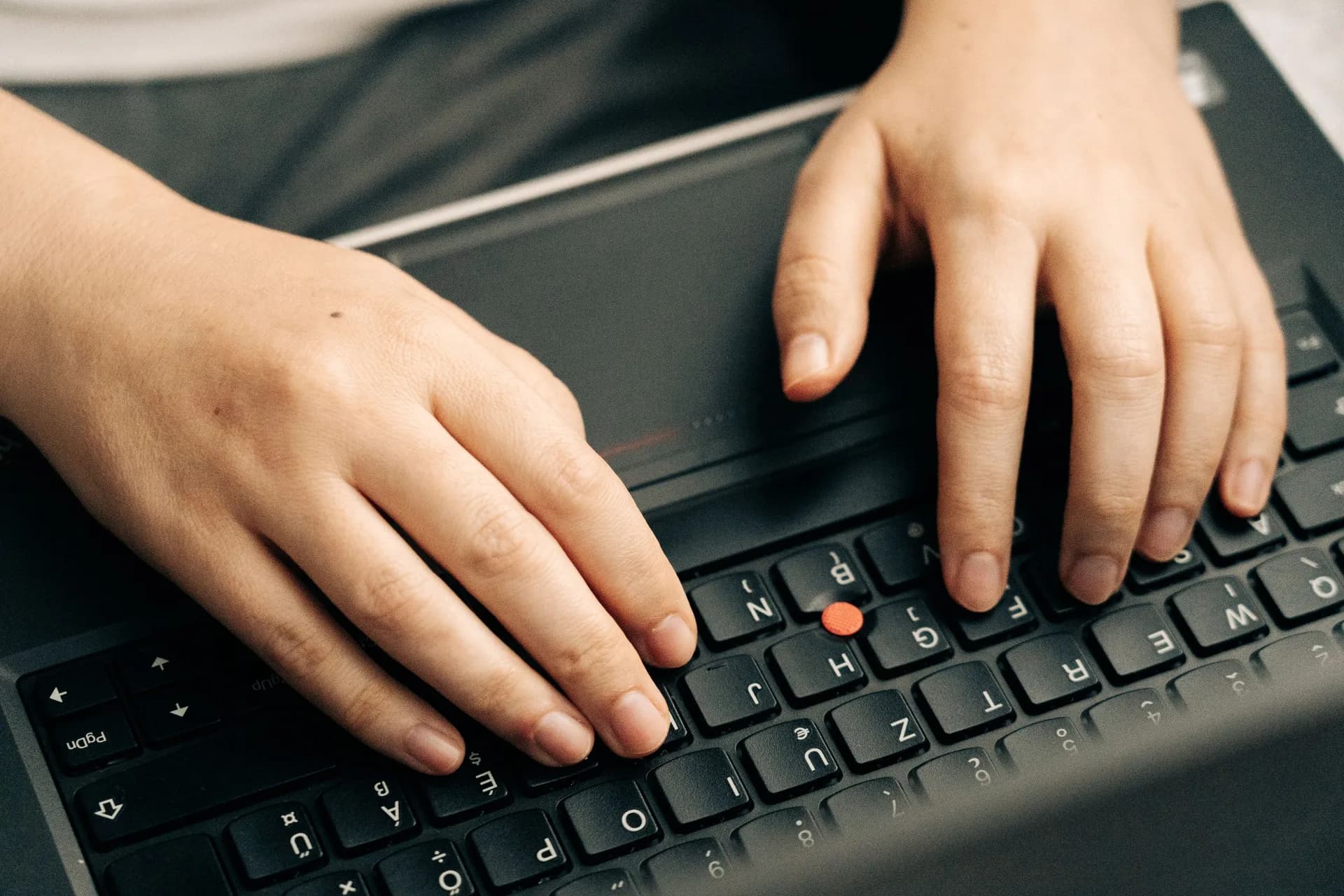
Voice typing stops after a few seconds because most built-in tools run a silence timeout — they pause when you stop making sound, not when anything breaks. Windows Voice Typing (Win+H) pauses on a vocal pause and the moment you touch the keyboard. macOS Dictation stops after 30 seconds of silence. The fix is a tool that records while you hold a key and never stops on a pause.
The boring truth is your dictation isn't failing. It's behaving exactly as designed, which is somehow worse. You pause to think, the listener gives up, and you're left talking to a text box that stopped paying attention three words ago. I've watched people poke the microphone, restart the app, and reinstall drivers — all to fix a feature that was never broken.
Here's what's actually happening. Most built-in voice typing assumes a vocal pause means you're done. It isn't waiting for you. It's waiting for silence, and silence is the one thing every real sentence is full of — the breath before a name, the gap while you find the word, the second you spend deciding whether "regards" is too formal. The tool reads that thinking time as "finished" and shuts the door.
Why voice typing cuts out after a few seconds

Three things end a dictation session early, and only one of them is a real fault. The first is a silence timeout — the tool stops because you stopped talking. The second is focus loss — the dictation was tied to one window or tab, and you clicked away. The third is a microphone that genuinely cuts out, which is the rarest of the three despite being the first thing everyone blames.
Sort your problem into the right bucket before you change a single setting. If it stops when you pause to think, it's a timeout. If it stops when you switch apps, it's focus. If it stops mid-word while you're still mid-sentence, then — and only then — start looking at your microphone. Most people are in bucket one and treating it like bucket three.
The silence timeout is the usual cause
A silence timeout is a countdown that resets every time you make a sound. Stop making sound for long enough and it fires. The exact window is short — about 5 to 10 seconds, as users report — which is roughly the time it takes to decide whether your email opener sounds desperate.
This is the part people miss: pausing to think is normal human speech. You don't dictate in one unbroken stream like a court stenographer on a deadline. You start, you stop, you reconsider. A tool with a silence timeout punishes exactly that rhythm. The pause that means "I'm thinking" gets read as "I'm done," and the session ends while you're still loading the next sentence.
There's no clever workaround on the built-in tools. You can talk faster, you can fill the gaps with "um," or you can pick a tool that doesn't run a silence timer at all. Two of those are bad ideas.
Windows: the Win+H timeout is by design
Windows Voice Typing (Win+H) does two things that end your session, and a Microsoft Community Support Specialist confirmed both are intentional. It pauses after a vocal pause. And it pauses the moment you type manually on the keyboard — so the natural move of fixing one typo by hand silently kills the listener.
The bad news: there is no setting to extend the timeout or keep it listening while you type. Microsoft support says so plainly — once it pauses, you reopen it. The "Wait time before acting" setting in Voice typing looks promising but doesn't help; it controls how long Voice typing waits before running a voice command, not how long it keeps listening. I've watched people toggle that setting for ten minutes expecting the timeout to change. It does not.
One more thing worth knowing: Win+H needs an internet connection to work at all. If your dictation dies the instant your Wi-Fi hiccups, that's why. For a fuller walkthrough, we wrote up why Windows dictation keeps stopping and a Win+H alternative that doesn't time out.
Google Docs: the tab cuts you off mid-sentence

Google Docs voice typing lives inside a browser tab, and that's its weak point. It works in the latest Chrome, Edge, and Safari — not Chrome-only, despite what half the internet insists. Community reports consistently describe it stopping when the Docs tab loses focus: you click another window, you check a notification, and the listening stops because the tab is no longer in front.
When Docs shows "We're having trouble hearing you," Google's own troubleshooting is refreshingly literal. Move to a quiet room. Plug in an external microphone. Adjust your microphone's input volume. And check that the microphone isn't being used by another application — a video call or a recording app holding the mic will cut Docs off mid-word. We cover the rest in Google Docs voice typing not working.
Mac: the 30-second silence stop, not a length cap

Here's the one most people get wrong, including a few articles ranking above this one. Apple's Dictation stops automatically when no speech is detected for 30 seconds. That is not a 30-second cap on how much you can dictate. Apple says you can dictate text of any length without a timeout — the 30 seconds is silence, not total length. Keep talking and it keeps going.
So when "Mac dictation cuts off after a few seconds" is the complaint, the cause is usually long thinking-pauses or a microphone input problem, not a length limit. Check that Dictation is pointed at the right input device, that nothing else is holding the microphone, and that the mic has permission. We go deeper in why Mac dictation keeps stopping and microphone works but dictation doesn't.
The fix that skips the timeout fight entirely
The best productivity hack is fewer steps, not faster steps. Fighting a silence timeout is the opposite — it's adding steps to keep a flawed step alive. The structural fix is to use a tool that doesn't run a silence timer in the first place.
That's the design choice behind Whisper by Remskill. Recording is push-to-talk: hold the hotkey, release to stop. A pause in speech never ends the recording — it runs as long as you keep the key held. The default hotkey is Ctrl+Space on Windows and Command+Option on Mac, and you can change it in Settings. When you let go, the microphone stays open for a brief tail buffer so your last few words aren't clipped as you trail off. Local mode runs entirely offline — no internet needed during transcription — so a Wi-Fi blip can't cut you off the way it cuts off Win+H. And it pastes wherever your cursor is, so it isn't bound to one tab or window. Switch apps mid-thought; the session keeps going.
The difference is the thinking-pause. With a timeout, your pause is a cliff. With hold-to-talk, your pause is just a pause.
When to stop troubleshooting and switch tools
You don't always need a new tool. If you're firing off a 30-word text and pausing rarely, Apple Dictation is free, built in, and works fine within its 30-second silence window. For quick one-line replies on Windows, Win+H is right there. The timeout only becomes a wall when you write in longer, more deliberate bursts — the email you rewrite twice, the paragraph you think through, the brief you draft on the train. That's the threshold where a no-timeout tool stops being a luxury and starts being the only thing that matches how you actually talk.
I lived the other end of this. Late 1990s, a relative had Dragon NaturallySpeaking on a Windows 98 desktop with 64MB of RAM. The training alone took 45 minutes of reading words aloud to calibrate it. Then it dictated at maybe 70% accuracy with a 4-second delay per sentence — 15 minutes to get one paragraph of a holiday letter down. The headset went across the room. I filed dictation under "ideas whose time has not yet come." It came. The tools just had to stop fighting the way people speak.
Further reading
Stop treating a timeout like a malfunction. Your microphone is fine; your tool just decided your thinking-pause meant "the end." Either learn to talk without breathing, or use something that waits for you instead of for silence. My younger self threw a headset across a room over a 4-second delay. The fix turned out to be patience — on the software's side, not mine.
Want voice typing that waits for you?
Download Whisper, hold the hotkey, and dictate a full paragraph without a single pause cutting you off.