By Denys Medvediev
Explainer
How accurate is Whisper, really
Whisper is very accurate on clear English audio and strong across major languages, but it is not perfect. The single biggest lever for your own accuracy is the microphone and a quiet room, not the model you pick. An AI pass cleans punctuation and filler after.
Last updated: June 2026
Whisper is accurate enough for everyday dictation and professional notes, scoring around 3% word error rate on clean read English with the medium model. Accuracy drops with accents, background noise, jargon, and overlapping speakers. The largest improvement most people can make is a better microphone and a quiet room, not a bigger model.
"How accurate is Whisper" is one of those questions with an honest answer and a marketing answer, and they're not the same. The marketing answer is "incredibly accurate, state of the art." The honest answer is "very good on a clean recording, noticeably worse on a bad one, and the difference between those two is mostly your microphone." I've watched the same model transcribe a sentence perfectly through a $20 USB mic and butcher it through a laptop mic across a noisy kitchen.
So this isn't a benchmark-leaderboard post. It's the answer I'd give a friend who asked whether they can trust voice typing for real work. Short version: yes, with caveats you can control. Long version below, including the one number that actually matters and the three things that quietly wreck accuracy no matter how good the model is.
Here's the thing most "Whisper accuracy" pages skip. Accuracy isn't one number. It's a number that moves with the model size, the language you're speaking, and — more than either of those — the quality of the audio going in. A small model on a clean recording beats a huge model on a muffled one, every time.
The way researchers measure this is word error rate, usually written WER. It's the percentage of words the system gets wrong. Whisper's published WER on clean English is low. Your WER on a Tuesday afternoon with the dishwasher running is a different story. I'll explain what the number means, what Whisper actually scores, what drags it down, and the boring, cheap fix that helps more than any model upgrade.
What "accuracy" actually means: word error rate
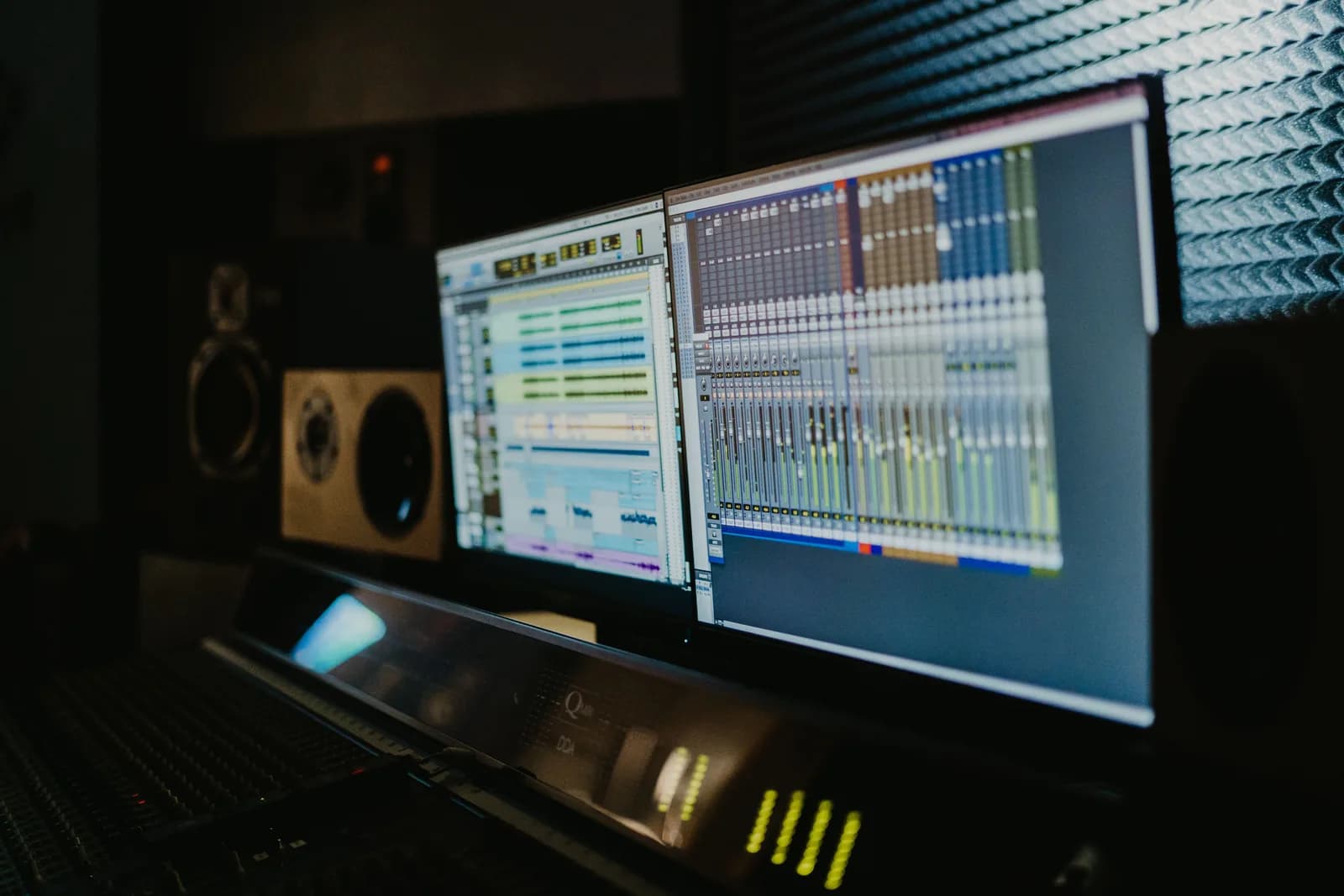
When people say a transcription system is "95% accurate," they almost always mean word error rate, or WER. It's the simplest honest measure there is: take a known passage, have the system transcribe it, then count the words it got wrong. A 5% WER means 5 words in every 100 came out wrong — a substitution, a deletion, or an inserted word that wasn't said. Lower is better. Zero would be perfect, and nothing real hits zero.
That last part matters, so I'll say it plainly. No speech engine is perfect, and any product that claims otherwise is rounding for a slide deck. Humans aren't perfect transcribers either — professional human transcriptionists land somewhere around 4% WER on clean audio, and worse on hard recordings. So when you read that Whisper does "3% WER," that's roughly at or near human level on that kind of audio, not magic. It's a tool that's right most of the time and wrong some of the time, like every tool.
One more nuance worth thirty seconds. WER counts every word equally, which doesn't match how you actually feel errors. Whisper mishearing "their" as "there" is a 1-word error that barely registers. Mishearing a client's name or a drug dosage is a 1-word error that ruins the sentence. So the headline number tells you the shape of things; it doesn't tell you whether the one word that matters survived. That's why a final read-through never goes out of style, no matter how low the WER.
So how accurate is Whisper in practice
On clean, read English, Whisper is genuinely strong. The publicly documented benchmarks put the medium model around 3% word error rate on a standard clean-speech test set, and the smaller model around 5%. In plain terms, on a decent recording of someone speaking clearly, you're looking at one or two wrong words per few sentences — usually a homophone or a stray comma, not a mangled meaning. For dictating emails, notes, and drafts, that's well past the threshold where it saves you time instead of costing it.
The mechanic in the app is the same regardless of how accurate the run turns out. You press a hotkey, speak, release, and the transcript pastes at your cursor in whatever app has focus. A small capsule appears while you talk so you know it's listening. What you're seeing in that capsule is the live recording — the accuracy question is decided in the half-second after you release, when the model turns that audio into text.
The honest caveat sits right next to the good number. Those benchmark figures are clean read speech in a lab. Your kitchen, your accent, your habit of trailing off mid-sentence — none of that is in the test set. The benchmark tells you the ceiling. The rest of this guide is about how close to that ceiling you actually get, and the levers that decide it. Spoiler: the biggest one isn't the model.
What actually moves the number up or down
Three things shape your real-world accuracy far more than the model badge: the audio, the language, and the words themselves. Audio quality is first by a wide margin. A built-in laptop mic picking up room echo, a fan, and a kid asking why the moon is sometimes not there will hand any model a harder problem than a podcast mic in a quiet room. The same model, same sentence, can go from near-perfect to noticeably wrong purely on the recording. This is the lever almost nobody adjusts and the one that pays off most.
Language is the second lever. Whisper's multilingual builds cover 99 languages, but that coverage isn't flat. English is the best-supported, the major European and Asian languages are strong, and low-resource languages — ones with less training data on the internet — are weaker and more error-prone. Translate-to-English is multilingual Whisper only; the English-only builds don't do it, and Parakeet's 25 languages don't either. So "supports 99 languages" is true and also doesn't mean all 99 are equally accurate. Test your specific language on your own audio before you trust it with anything important.
The third lever is the content. Accents shift the number — Whisper handles a broad range out of the box without any "training" step, but a heavy accent on technical jargon is the worst case for any engine. Domain vocabulary trips it too: unusual product names, medical or legal terms, surnames it's never seen. And overlapping speakers are the genuine hard wall — Whisper is built for one voice at a time, so two people talking over each other will produce a mess. On local Whisper you can fight back with custom vocabulary and hotword biasing, nudging it toward the names and terms you actually use. Parakeet doesn't offer hotwords, and that's a fair reason to pick Whisper if your work is full of proper nouns.
Bigger model, more accuracy, less speed
There's a real tradeoff between accuracy and speed, and the app makes you see it instead of hiding it. As a rule of thumb, the larger the Whisper model, the more accurate it is and the slower it runs. The English-only Small model is around 480 MB and quick; Medium is about 1.5 GB and more accurate; the multilingual Large v3 is roughly 3 GB and the best accuracy on offer, but it wants 16 GB of RAM and a recent machine to feel snappy. Pick the biggest model your hardware runs comfortably, not the biggest one that exists.
The interesting exception is Turbo. Whisper's Turbo build (distil-large-v3) is documented as roughly 6 times faster than Large v3 while keeping about 99% of its accuracy. That's the sweet spot a lot of people land on: nearly the quality of the biggest model without the wait. It's around 1.5 GB. If you want strong accuracy and don't want to stare at a spinner, Turbo is the pragmatic middle.
Here's the part that reframes the whole tradeoff. The accuracy gap between a small model and the largest one is real but smaller than you'd guess — a few percentage points of WER on clean audio. The accuracy gap between a laptop mic and a decent USB mic on the same model is bigger. So before you download 3 GB chasing the last point of accuracy, plug in a better mic and record somewhere quiet. The boring truth is most "the model got it wrong" complaints are actually "the room got it wrong."
Local or cloud: where the best accuracy lives
The app doesn't pick a path for you. It presents three and lets you choose based on what you're after — speed, language coverage, or top-tier accuracy. For accuracy specifically, here's how they line up, because the difference is real and worth understanding before you commit a recording to one of them.
The three paths, ranked the way accuracy actually shakes out:
- Local Parakeet — NVIDIA's TDT engine, around 600 MB, the fastest local option at 5 to 10 times faster than Whisper on CPU. Accuracy is good — not Large-v3 good, but more than enough for everyday English dictation. Covers English plus 24 European languages, 25 in total. No translate-to-English, no hotwords. Pick it when speed matters and you mostly speak English.
- Local Whisper — slower than Parakeet on the same machine, but the multilingual builds reach 99 languages, translate to English, and let you bias toward custom vocabulary and hotwords — the accuracy controls that matter for proper nouns and jargon. The largest build (Large v3) is the most accurate local option. Pick it for multilingual work, translation, or fine control.
- Cloud (OpenAI, BYOK) — best-in-class accuracy and web access using your own OpenAI key, billed straight by OpenAI. Transcription runs on gpt-4o-mini-transcribe by default. It needs internet, so it's the one path where your audio leaves your machine. The Cloud surface is part of Whisper Pro.
The honest ranking for raw accuracy is roughly: cloud at the top, local Large v3 a close second, Parakeet a capable third for English. But "top accuracy" only wins if your audio is clean enough to deserve it. Feeding cloud a muffled recording from across the room won't beat local Whisper on a clean one. For most dictation, both local engines run fully on your machine with nothing sent to a server, and that's plenty. Reach for cloud when you have a genuinely hard recording or you need a fact pulled off the web mid-sentence.
Four ways to get your own accuracy up
Whisper's ceiling is set by the model. Your floor is set by everything around it, and the floor is where most people lose accuracy. The good news is the fixes are cheap and take a few minutes. Here are the four that matter, in order of how much they help.
Step 1 — Fix the microphone first.
A $20 USB mic does more for accuracy than any model upgrade. Get it close, off-axis from your mouth so it doesn't pop, and away from a laptop fan. This is the single highest-return change you can make.
You'll know it worked when the same sentence that came out garbled on the laptop mic comes out clean.
Step 2 — Quiet the room.
Close the door, pause the music, wait for the dishwasher cycle to end. Background noise and echo are what most "the model is wrong" moments actually are. A quiet room is free.
You'll know it worked when filler words and half-caught phrases stop showing up in the transcript.
Step 3 — Match the model to the job.
Pick the biggest model your machine runs comfortably, or Turbo for near-top accuracy at speed. For names and jargon on local Whisper, add custom vocabulary and hotwords so it leans toward your terms.
You'll know it worked when a model finishes downloading, shows as ready, and your proper nouns start landing right.
Step 4 — Let an AI pass clean it up.
Raw dictation is a run-on with filler. Whisper can run an AI cleanup pass that fixes punctuation, strips the "ums," and tidies the sentence before it lands. Say the activation phrase "Hey whisper" to trigger it.
You'll know it worked when the pasted text reads like edited prose, not a transcript.
That last step is worth seeing, because it changes what "accuracy" even means for your output. The transcription can be word-perfect and still read like a run-on, because that's how people talk. The cleanup pass fixes the readability that WER never measures. On a local model it runs through Ollama; in cloud mode it's gpt-5-mini by default. Here's the same sentence before and after the pass:
um so the accuracy mostly comes down to the mic not the model and like a quiet room helps more than people think
The accuracy mostly comes down to the mic, not the model — and a quiet room helps more than people think.
Notice the cleanup didn't change a single word's meaning; it added the punctuation and dropped the filler that the raw transcript carried. That's the part people conflate with accuracy and shouldn't. The model's job is to hear you correctly. The AI pass's job is to make the correct words read well. Get the mic and the room right, and both jobs get easier. If you want the speak-then-clean flow in any app, the same hotkey will dictate clean prose into any app, not just one.
The honest verdict on Whisper's accuracy
So, the straight answer. Whisper is accurate enough to trust for real work — emails, notes, drafts, meeting recaps — on clean audio in a well-supported language. It is not perfect, and it never claims to be. Accents, background noise, heavy jargon, and overlapping speakers all pull the number down, and no model badge fully rescues a bad recording. If you came here hoping for "100% accurate," the honest answer is that nothing is, and anyone selling that is selling a slide.
When should you not bother chasing Whisper-level accuracy? If you only dictate the occasional 30-word text, your operating system already does this for free. On Windows, press Windows key + H to open Voice Typing wherever your cursor is — it punctuates on its own, though it routes through Microsoft's servers and needs internet, so it isn't offline. On Mac, Dictation in System Settings types into any field, and on Apple Silicon general text can be processed on-device. For short bursts, those are fine, and I'm not going to tell you to install anything for a one-line reminder. A dedicated tool earns its place at longer notes, multilingual work, offline privacy, and the accuracy controls — hotwords, model choice, a cleanup pass — that the built-ins don't give you.
If you're weighing the local engines against each other, the accuracy-versus-speed call is the whole decision, and it's covered plainly in which Whisper model to use and the Parakeet model breakdown. For most people the answer is unglamorous: a mid-size model, a decent mic, a quiet room, and a cleanup pass. That combination gets you within a hair of the benchmark on the audio you actually record.
If accuracy is your worry because you want to skip the cloud entirely, the trade-offs in offline speech to text cover how local models hold up without a network in the loop.
I spent a week early on convinced a model upgrade would fix my transcripts, downloaded 3 GB, and got back maybe a point of WER. Then I bought a $20 USB mic and moved off the kitchen table, and the transcripts got noticeably cleaner the same afternoon. The model was never the problem. The room was. Whisper is very accurate; whether you see that depends on what you feed it.
Hear it for yourself on your own voice
Download Whisper, plug in a decent mic, and dictate a paragraph. Accuracy is a lot easier to judge on your own audio than on someone else's benchmark.
Free local mode for any signed-in account. No card required to start.