By Denys Medvediev
Troubleshooting
Windows dictation stuck initializing
Voice Typing (Win+H) that hangs on "Initializing" is almost always a stalled background process. End the Microsoft Text Input Application in Task Manager, press Win+H again, and it usually starts. If it keeps happening, the deeper cause is the online speech service it depends on.
Last updated: June 2026

Windows dictation stuck on initializing is fixed by ending the Microsoft Text Input Application in Task Manager, then pressing Win+H again. If it returns, toggle Online speech recognition off and on under Privacy and security, then reboot. A dedicated offline dictation tool sidesteps it entirely, since local transcription never waits on Microsoft's online speech service.
You press Win+H, the little Voice Typing bar appears, and then it just sits there. "Initializing." Maybe "Getting things ready." The dots cycle. You wait. You speak anyway, hopefully, like talking to a smart speaker that's clearly asleep. Nothing lands. I've watched this exact thing happen on three different machines, and the first time it cost me a good twenty minutes before I figured out what was actually stuck.
Here's the short version before the long version: it is almost never your microphone, and almost always a background process that Windows started, didn't finish, and won't retry on its own. The fix takes about thirty seconds in Task Manager. The reason it keeps coming back is a different, slower story about the online speech service that Win+H quietly depends on — and I'll cover that too.
The thing nobody says plainly on the first search result: Windows Voice Typing is not a self-contained feature. When you press Win+H, Windows spins up a helper process and, behind the scenes, reaches out to Microsoft's cloud speech service to do the actual recognition. "Initializing" is the screen you see while that handshake happens. When the helper process gets wedged — usually after a Windows update or a sleep/wake cycle — the handshake never completes, and the bar sits there forever.
So the real questions are: how do I un-wedge it right now, how do I stop it coming back, and is there a way to dictate that doesn't depend on any of this. I'll do all three, with the exact Microsoft steps, and I'll be honest about when the built-in feature is genuinely all you need.
Why Windows dictation gets stuck on "Initializing"
In Windows 11, Dictation is called Voice Typing, and it converts speech to text using online speech recognition. That last part is the whole story. Win+H is a front end. The recognition happens through Microsoft's cloud speech service, and a local helper called the Microsoft Text Input Application brokers the connection. When that helper hangs, you get "Initializing" with no end in sight.
From Microsoft's own support threads and docs, the recurring causes are short and specific. The Microsoft Text Input Application process gets stuck, usually after a Windows update or after the PC wakes from sleep. The Online speech recognition privacy toggle is off, so the cloud handshake can never start. The input or speech language doesn't match an installed recognition pack. Microphone access is blocked at the privacy level. Or a Windows update left the speech service in a bad state and a reboot hasn't cleared it.
Worth saying out loud: this is not your hardware. If your mic works in a call, it works for dictation. The failure is upstream of the microphone, in the part of Windows that's supposed to wake the recognizer up. That also tells you why the fixes below are about restarting processes and toggling services, not buying a new headset.
The fast fix that works for most people
Restart the helper process. This is the one that clears it for the large majority of people, and it takes under a minute. The steps, straight from Microsoft's support thread:
Open Task Manager (right-click the taskbar and choose Task Manager, or press Ctrl+Alt+Delete and pick it). Click "More details" if you're on the compact view. Under Background processes, find "Microsoft Text Input Application," right-click it, and choose "End task." Then press Win+H again. The Voice Typing bar restarts the helper from scratch, the handshake completes, and the bar goes from "Initializing" to listening. If the process doesn't appear in the list, a plain reboot does the same thing — it just takes longer.
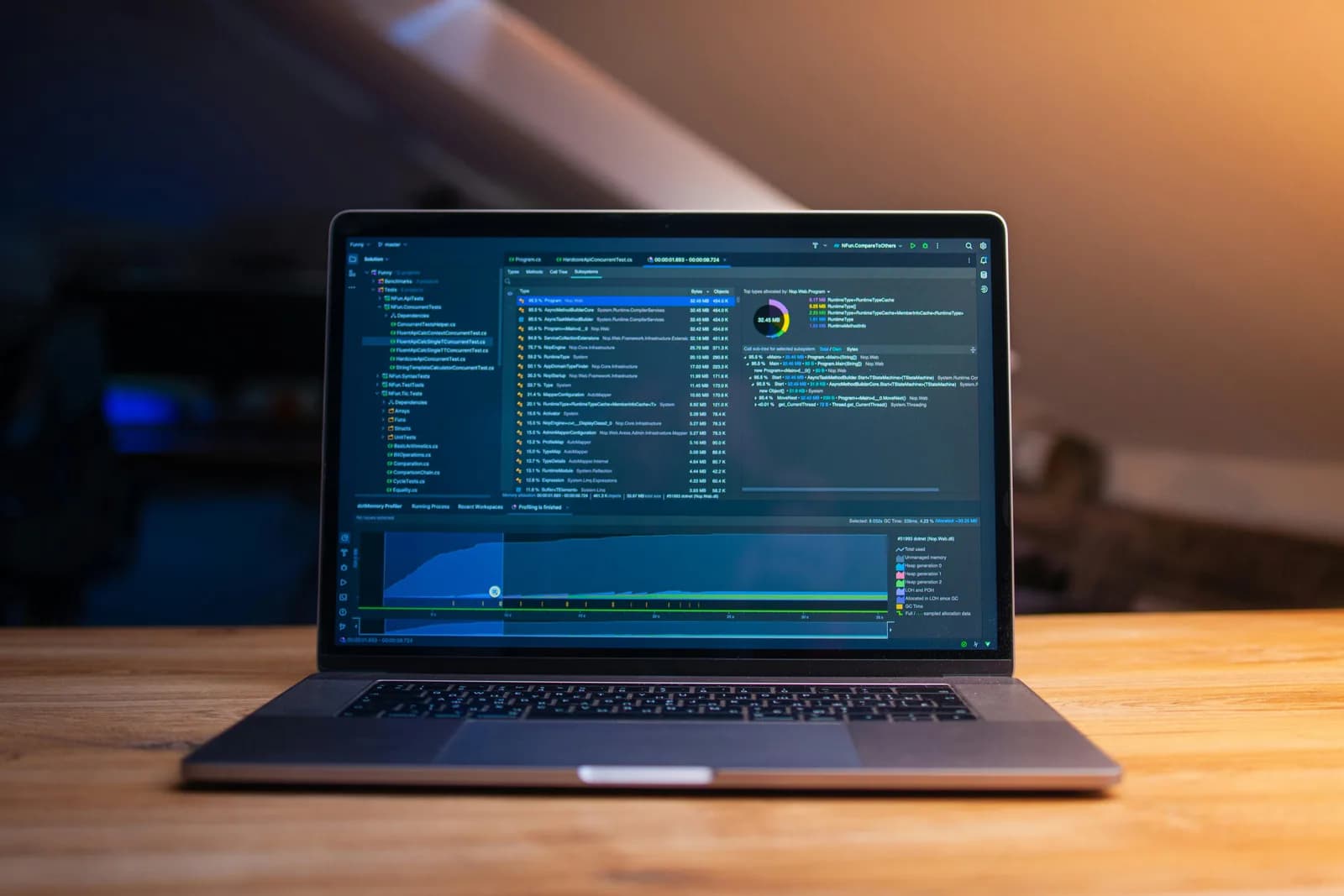
That's the remediation that fixes the immediate problem. The overlay above is from a different tool — a system-wide dictation app — and it's here to make one contrast: a local recorder either shows you it's listening or it shows you an error. There's no third state where it sits forever pretending to start, because there's no cloud service it has to wake up first. More on that in the next section, because if this keeps happening to you weekly, the permanent answer is to not depend on the thing that keeps hanging.
The permanent fix: dictation that never initializes
If you're ending the same task every other day, the durable fix is to stop relying on a feature that has to phone home before it works. A local dictation tool transcribes on your own machine — there's no online speech service to wake, so there's no "Initializing" to get stuck on. You need a Windows 10-or-newer PC and a working microphone. Here's the four-step setup with Whisper.
Step 1 — Install Whisper and sign in.
Download from the download page, install, and create a free account. No card. The whole local transcription pipeline opens right away.
You'll know it worked when the app's tray icon appears and the setup wizard offers to pick a model.
Step 2 — Pick a local transcription path.
The app doesn't choose for you. For an offline fix, pick Local Parakeet (fastest English) or Local Whisper (multilingual, translation). Both run entirely on your machine. Cloud is offered too, but it's the one path that uses a network.
You'll know it worked when a model finishes downloading and shows as ready.
Step 3 — Set your hotkey.
The Windows default is Ctrl+Space, held as push-to-talk. Pick something else in Settings if Ctrl+Space clashes with another app. It's a dedicated key, so it won't steal focus or auto-stop the way Win+H can.
You'll know it worked when a test recording pastes into any text field.
Step 4 — Put your cursor anywhere and talk.
Click into any text box — email, doc, search bar — hold the hotkey, say a sentence, release. The transcript pastes where your cursor is, transcribed locally, no initializing screen.
You'll know it worked when your spoken sentence appears as text, with no waiting on a cloud handshake.
The only slow part is the one-time model download. After that the app is local, so the failure mode that brought you here — a wedged helper waiting on a server — simply isn't in the design. It records, transcribes on your CPU, and pastes. There's no online speech service in the loop to hang.
If you'd rather repair the built-in one
Plenty of people just want Win+H working again and don't want another app. Fair. Here's the deeper Windows-side troubleshooting, in the order I'd try it, all from Microsoft's own support docs and threads. None of this touches the registry, so there's nothing here that can break your machine.
First, the toggle most people miss. Voice Typing needs online speech recognition turned on. Go to Start, Settings, Privacy and security, Speech, and switch Online speech recognition on. If it's already on and dictation is stuck, toggle it off, wait a moment, and turn it back on to force the service to re-establish. Second, check your language. Under Settings, Time and language, Speech, make sure the speech language matches the language you're typing in and that the recognition pack for it is installed. A mismatch here is a quiet cause of a stalled bar.
Third, microphone permissions at the system level. Under Settings, Privacy and security, Microphone, confirm "Microphone access" is on and that apps are allowed to use the mic — Voice Typing is one of those apps. Fourth, run the built-in Speech troubleshooter: in older builds it's under Settings, Update and Security, Troubleshoot, Additional troubleshooters, Speech. Fifth, make sure Windows is fully updated, since several of these threads end with "a later update fixed it" — the flip side being that an update sometimes caused it. And if all of that fails, a reboot clears a speech service that an update left in a bad state. The honest catch with every one of these: they fix the symptom, not the dependency. Win+H still needs the cloud handshake every single time you press it, which is exactly the thing that keeps breaking.
Local or cloud: which mode actually avoids this
If the reason you're here is a feature that won't stop waiting on a server, the answer is local mode, full stop. Both local engines run entirely on your machine with nothing sent anywhere, which is the whole point — no online speech service means no "Initializing" to hang on. Here's how the three paths the app makes you choose between actually differ.
The app makes you pick, so here's how I'd think about it for this particular problem:
- Local Parakeet — NVIDIA's TDT engine, around 600 MB, and the fastest local option — 5 to 10 times faster than Whisper on CPU. Covers English plus 24 other European languages, 25 in total. No translate-to-English. Fully offline. If you speak English or a European language, this is the quickest way off the cloud-handshake treadmill.
- Local Whisper — slower than Parakeet on the same machine, but the multilingual builds cover 99 languages and can translate to English. The English-only builds are English-only, not 99. Pick this for Chinese, Japanese, Korean, or any translation work, which Parakeet can't do. Default English model is around 480 MB. Also fully offline.
- Cloud (OpenAI, BYOK) — best accuracy and web access, using your own OpenAI key billed straight by OpenAI. Transcription runs on gpt-4o-mini-transcribe by default. It needs internet — so it's the one path that, like Win+H, depends on a network. The Cloud surface is part of Whisper Pro.
The boring truth is that for everyday dictation, local is plenty, and for the specific frustration that brought you here, local is the actual cure. Cloud earns its place when you want top-tier accuracy on a hard recording or you need a fact pulled off the web mid-sentence. But if your complaint is "it keeps waiting on a server," picking another server-dependent path would be missing the point. Start local.
Cleaner text once dictation actually works
Once dictation runs — built-in or otherwise — you hit the next reality: raw speech comes out as a run-on. You say "okay so reset the password email the client back and tell them it's sorted before lunch," and that's the unpunctuated wall any speech engine hands you. Cleaning it is where tools differ.
Windows Voice Typing can add punctuation as you speak once it's running. For heavier cleanup — stripping the "ums," fixing the run-ons, turning a spoken paragraph into something you'd actually send — Whisper can run an AI pass before the text lands. Say the activation phrase "Hey whisper" and the text gets enhanced first. On a local model that runs through Ollama; in cloud mode it's gpt-5-mini by default.
okay so reset the password email the client back and tell them it's sorted before lunch um and cc my manager
Okay, so reset the password, email the client back, and tell them it's sorted before lunch — and CC my manager.
The cleanup step is also why a dedicated tool earns its keep beyond just dodging the "Initializing" hang. You're not only getting reliable capture; you're getting text that's closer to done. If you want the broader version of this, the same speak-then-clean flow is what lets you type faster with voice across every app you open, not just the one window Win+H happened to land in.
And because it pastes at the cursor in any field, the same flow works in a browser tab too — dictating into Google Docs behaves the same as dictating into a desktop editor, which Win+H can't always promise once focus shifts.
When the built-in one is enough

Here's the part where I talk you out of installing anything. If ending the Microsoft Text Input Application fixed it and it hasn't come back, you don't need another app. A one-off stuck-on-initializing after an update is exactly that — a one-off. Win+H is free, built in, and for short bursts it's genuinely fine. I'm not going to tell you to install software to dictate a two-line reply.
The built-in route is the right call when a few things are true: you mostly dictate short text, you're always online anyway, and you're comfortable with your speech going to Microsoft's cloud to be recognized. That last point is the real fork. Win+H routes your voice through Microsoft's online speech service by design — fine for a grocery list, worth a second thought for a client email or anything you'd rather keep on your own machine.
Reach for a dedicated, offline tool when the built-in starts hurting on repeat: the hang keeps coming back after every update, you dictate long passages, you work offline or want your voice to stay local, or you want one hotkey that behaves the same in every app instead of a bar that sometimes initializes and sometimes doesn't. Below that bar, use what's free. The fixes earlier in this guide are there precisely so you can.
If the real issue is broader than this one hang — Win+H doing nothing, no text at all, or the wrong language — the wider checklist in voice to text not working on Windows covers the rest of the failure modes that aren't strictly an "Initializing" stall.
Further reading
Windows shipped a voice feature that has to wake up a cloud service before it'll type a word, and then didn't build a way for it to retry when the wake-up fails. So we end a background task with a name three words too long, press the same two keys again, and call it fixed. It usually is. But the first time a feature makes you open Task Manager to use it, you start quietly shopping for one that doesn't. I dictated most of this guide with a tool that has never once shown me the word "Initializing." That's the entire pitch.
Dictate without the initializing screen
Hold a hotkey, talk, release. The transcript lands at your cursor in any app — transcribed locally, with no cloud service to wake up first.
Free local mode for any signed-in account. No card required to start.